Site Meter

Sunday, November 26, 2006

Dirty Laundry


A sign seen by my brother in Argentina.

Saturday, November 25, 2006

This is Wrong. This is Just Wrong

Going for a pee in a café earlier this evening, I was confronted with this in the urinal:


A fruit salad. They'd piled a fruit salad in the thing to absorb the smell of my pee. Suppose I was eating a fruit salad. I would get up from my fruit salad at the table, go piss on a fruit salad, then come back to one and resume eating it. And that is just wrong.

Rouen Cathedral


If I was Monet, this would be my Rouen Cathedral. Click to enlarge.

Friday, November 24, 2006

Bionic Man, Suggested Put-Down Of


Heard this on the radio recently, can't remember who from. But as put-downs go it seemed worth preserving: 'I saw Lee Majors the other day. He looked terrible. I told him, You look like a million dollars.'

It's Always Night


The De Selbyesque sentiment behind the epigraph from Thelonious Monk to Thomas Pynchon's new novel, Against the Day, is all fine and well, but its internal rhyme is just a bit too distracting for me: 'It's always night, or we wouldn't need light.' De Tocqueville, was it, said mankind was given language to conceal its thoughts from itself; and it's so like the English language to come between us and our best ideas.

Attack on Democracy


Commentators have rushed to condemn former loyalist prisoner Michael Stone's gun and blast bomb attack on the Stormont assembly today. 'If Michael Stone wants to attack the democratic process in Northern Ireland', Northern Ireland Secretary Peter Hain commented, 'why can't he join a political party like the rest of us' {snip}

Thursday, November 23, 2006

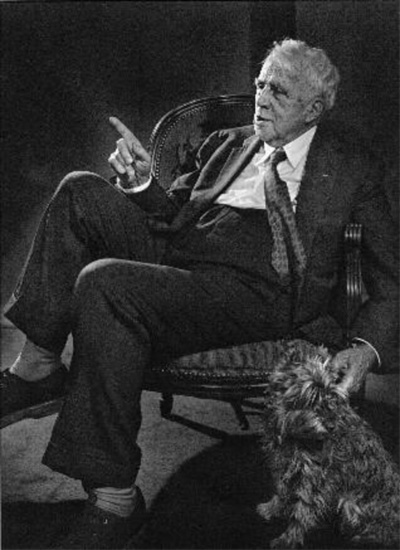
Robert Frost


Robert Frost described himself as ‘the author of several books against the world in general.’

Seinfeld Series 7 DVD Bloopers Just In

Monday, November 20, 2006

Spinach


'Monsieur Prudhomme' on spinach in Flaubert's Dictionary of Received Ideas: 'I don't like it and I'm glad I don't, because if I liked it I would eat it − and I can't stand it.'

Wednesday, November 15, 2006

Oh Joanna!


Oh Joanna, with all that snow, your funny pixie ears, your having Dave Eggers tell everyone how obsessed he is with you, and your sixteen minute tracks on Ys!

All my bones they are gone, gone, gone
Take my bones, I don't need none
Cold, cold cupboard, lord, nothing to chew on!
Suck all day on a cherry stone

Tuesday, November 14, 2006

'Life is Futile'/DVD Case Flarf Novella


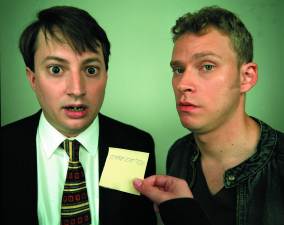
The episode and episode 'chapter' titles from the Peep Show Series 3 DVD.

Mugging
1. The Victim Flees
2. Big Suze is Here!
3. I'm Getting Threesomes
4. Lump of Monk

Sectioning
1. I've Got a Girlfriend
2. Life is Futile
3. She's Kooky
4. In For Observation

Shrooming
1. German Biscuits
2. Andy's Theme
3. Magic Eye of Execution
4. Endless Pooing

Sistering
1. Jumbo Cashews
2. Internet Research
3. Modern Day Eunuch
4. The Horsey Type

Jurying
1. Cheech and Chong
2. Internet Research
3. Jailhouse Rock
4. You Are a Moron

Quantocking
1. Don't Say Crack
2. Yoghurt Cock
3. Flip Flops & Sombreros
4. I Didn't Kill Him

Monday, November 13, 2006

Asbian


Asbian (n.). A lesbian with an asbo.

Sunday, November 12, 2006

Tpyos and Other Non Sequiturs (Non Sequuntur)


Aidan Higgins


I posted to the comments stream here the other day but mistyped something and had to post a ps, because unlike the main blog the comments can’t be revised. This set me thinking about typos, about how the pen is mightier than the wrist. As the following examples remind me.

A poem I had responsibility for printing was due to contain the line ‘I no longer goad the stubborn beasts’ but came out as ‘I no longer goad the stubborn breasts’.

The 1631 King James Bible urged readers (Mark 7:27) to 'Go and sin on more', but personally I prefer the 'Bile Fellowship' that used to tout for business on Dublin's Pearse Street.

In Terence Brown’s book about Yeats something which, I’m going to presume, was ‘worth noting’ comes out instead as ‘worth nothing’.

There is a Les Murray poem called ‘The Genetic Universe’ which is listed in its volume contents page as ‘The Genital Universe’.

Or the ad for a Mediterranean cruise describing ‘sofas and chairs […] filled with prostate passengers seeking relief.’

Not strictly a typo, but I like the newspaper line-break that turned Paul McCartney into a ‘pop leg-end’ (insert joke about his wife here).

Do student howlers count as typos? Maybe not. Still, I like the ‘Ironic’ columns the Greek invented, according to a student of D.J. Enright (in Play Resumed). ‘They also had myths. A myth is a female moth.’ I also liked a description I once heard of the novel Langrishe, Go Down by Alex Higgins. The best one I’ve seen was a description of Webster’s The White Devil: ‘Fleeing the Turkeys, the assassins reappear dressed as Cappuccinos.’

There is a poetry urban myth about a typo in a Sara Berkeley poem whereby the line ‘emerging from my discordance’ lost its r and became ‘emerging from my disco dance’. But go look it up. Disco dance it is, but disco dance it’s meant to be. Good story though.

Still, these are fairly rubbish examples. Someone else do the heavy lifting for me and post some better ones in the comments stream.

Tom Waits' New Album


Orphans is dead-end kid driving a coffin with big tires across the Ohio River wearing welding goggles and a wife beater with a lit firecracker in his ear.

Friday, November 10, 2006

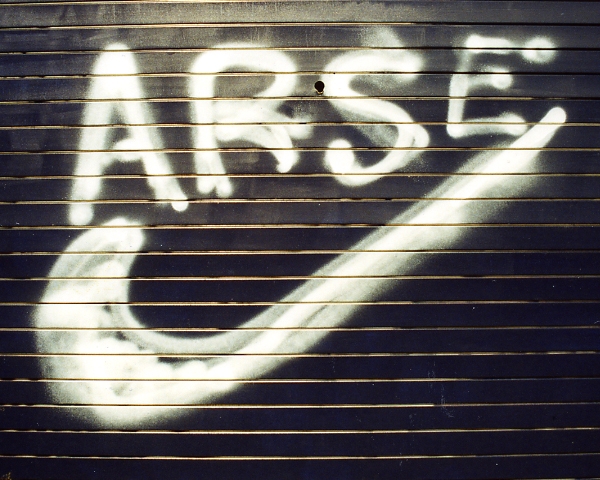
Arse


According to the BBC a man on Wearside, without so much as taking the precaution of entering himself for the Turner Prize first, has stuck a firework up his arse and lit it.

Thursday, November 09, 2006

Meteors, Meteorites, Meteroids


Joanna Newsom explains:

Told, the meteorite is the source of the light
And the meteor's just what we see
And the meteoroid is a stone that's devoid of the fire that propelled it to thee

And the meteorite's just what causes the light
And the meteor's how it's perceived
And the meteoroid's a bone thrown from the void that lies quiet in offering to thee

Private World


This white cat (whose name is 'the white cat') is profoundly deaf. As a connoisseur of Japanese cinema, his appearances through my catflap may or may not be indebted to the scene in Kurosawa's The Seven Samurai in which the apprentice (my cat) is encouraged to whack the samurai (the white cat) over the head with a sword only to be intercepted every time. He lives, or appears to an outsider to live, in an ESSENTIALLY PRIVATE WORLD.

Capuchin monkey given latte in monkey-themed laminated zoo restaurant café menu

Saturday, November 04, 2006

Consolations of Religion


Critic and artist: how close should the two get? I've no idea, but try the following for size, from Shane Alcobia Murphy’s fascinating new study, Sympathetic Ink: Intertextual Relations in Northern Irish Poetry:

In the course of preparing this book, I published a couple of articles on McGuckian’s poetry which prompted a flurry of correspondence from her. She was unhappy with the fact that I was looking for, and uncovering, the sources behind her work. Apologising for her initial anger, and in an effort to describe her own method of poetic composition, she wrote a poem entitled ‘Mantilla’ and dedicated it to me. […] McGuckian self-consciously describes the action of writing a poem with the aid of a source text, the immediate purpose of which, in this instance, is purely therapeutic. She stated in the letter: ‘I had to write something in the usual way as soon as I – as I shouldn’t??? – could in case I never would again. But I was very aware in this of doing so, and trying not to be anyone but myself, and also of your dedication to your thankless task of studying me.’ The perceived (and wholly unintentional) criticism in my articles had caused the poet great fear, anxiety and anger, yet she learned, through meditation, to make peace with it. ‘The sadness of anxiety’, says the Buddhist monk Thich Nhat Han, ‘can be used as a means of liberation from torment and suffering, like using a thorn to remove a thorn.’

Wednesday, November 01, 2006

Civil War Ends


Announcing the terms of their truce to a press conference yesterday afternoon Roy Keane and Mick McCarthy demanded the immediate reintegration of counties Fermanagh and Tyrone into the Irish Republic, the removal of all brown smarties from their dressing room snacks, and the ironic handover of Rathnew, Co. Wicklow to Northern Ireland 'because it's such a dump' and furthermore {snip}

Attempt to Discover Life (cont.)


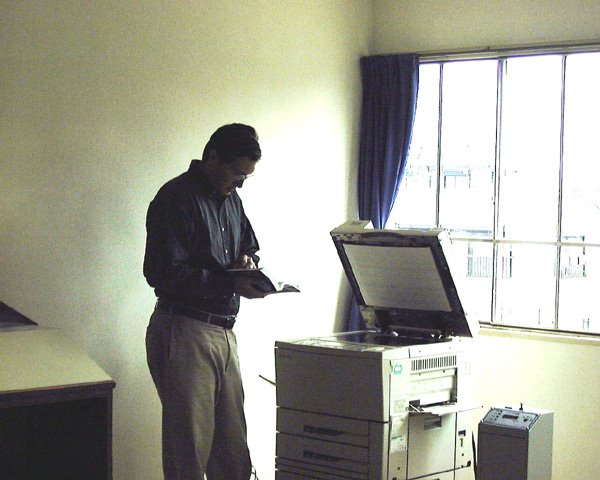
Sometimes when the paper jams in the copier and I follow the flashing lights on the console, open the flaps and find nothing, it decides there was no paper jam after all and just keeps going. Attention seeker! Only after running off my copies do I notice the edge of my shirt sleeve visible against the copied page margin. My red shirt, love that red shirt. Photocopiers, the cartoon is telling us, serve as reminders of the menial side of apparently skilled work, yet humourously so. Ah, Dilbert. Turn your eyes radioactive green staring into the copier's heart. Warning: in the event of green glow spillage this room/your life may be encased in lead. If this happens, attempt futilely to evacuate in an orderly fashion before returning to your work station, singing to yourself all the while. Another half-life will be along any minute now. No, you go first if you've only got one to do. I've got loads; I'll be ages. (Paper jams.) Hypochondriac!

Climate Change


In Steve Bell's 'If...' cartoon in today's Guardian (I'd give a link to it, but there isn't one), Tony Blair looks forward to being remembered as the man who 'suggested we invade Greenland and stop climate change by force.'

Tuesday, October 31, 2006

Attempt to Discover Life (cont.)


Canada geese over the railway bridge by the cafe, low and close, the slag-laden freight train freeze-framed on its way past: life can be good but we must not say so, never say so, consider this sentence unwritten.

Monday, October 30, 2006

Credo


I believe in extreme views lightly held and light views extremely held, but not in light views lightly held or extreme views extremely held.

Sunday, October 29, 2006

Borat


US-based actual Kazakh bigot, misogynist and anti-Semite Aslan Bogdanov is adjusting little by little to how hilarious even he finds it these days that he wishes the ethnics a few doors down would sling their dirty asses back to Uzbekistan.

Old English


What we call Old English was in fact Young English and what we speak today, that's Old English; Flann O'Brien noticed that.

Quatrain


The little fat girl with terrible skin gets sick
in her hand and opening it releases
a butterfly that flops back to earth
and touching it sticks to and drowns in the puke.

Biro Telekinesis


Idea for children's book: pets with magic powers, but charmingly useless ones e.g. the ability to make biros fall off desks, to rearrange paper clips telekinetically into swear-word shapes etc.

Saturday, October 21, 2006

Robin Robertson, Meet Nigel Tufnell


'Pushing up, hard and fibrous
from the ground, it is said to be
grown for the mouth...'

Yes, it's the familiar sound of a Robin Robertson poem ostensibly about food but which is in fact about sex. There was 'Artichoke' in his first book ('The meat of it lies, displayed, /up-ended, al dente, /the stub-root aching in its oil'), and now he's done it again in Swithering, with 'Asparagus': 'the dark tip – slubbed and imbricate, /tight-set and over-lapping round the bud.'

Those Heaneyisms aside, whose voice am I hearing in there too? I'll interleave some lines from the man I mean with those of 'Asparagus' to help spell it out.

'You know very much like, I'm really influenced by Mozart and Bach, and it's sort of in between those, really, it's like a Mach piece really...'

'Steamed till supple /so the stem is still firm...'

'This song is in D minor. The saddest of all keys. People weep instantly when they hear it...'

'In a slather and slide, butter /floods at the bulb-head.'

'What do you call this?' 'Well, this piece is called "Lick My Love Pump."'

Wednesday, October 18, 2006

Existential Stammer

To judge from his new book, Horse Latitudes, Paul Muldoon continues to suffer from a strange case of what I can only call an existential stammer:

I was baffled, baffled as one who wakes…
(‘Alba’)

Now pitching himself like a forlorn hope
in a pitched battle, Angus howls and howls…
(‘Now Pitching Himself Like a Forlorn Hope’)

Every point was a point of no return
where to make a mark was to overstep the mark…
(‘The Old Country’)

Every track was an inside track
where every horse had the horse sense…
(‘The Old Country’, and it goes on like that, all thirteen sections of it)

We cluster at one end, one end of Dillon Gym…
(‘Bob Dylan at Princeton, November 2000’)

I had one eye, just one,
they prised and popped open.

I had one eye, just one,
they prised and propped open
like a Fomorian’s…
(‘The Outlier’)

What’s the difference between clustering ‘at one end’ of the gym and ‘at one end, one end’? It’s something he’s been doing since around the time of The Annals of Chile. You can hear something of the same thing too in. the. way. he. reads. his. poems. aloud. It lends his work, I’d like to suggest, a very low centre of gravity. Whenever something threatens to push a poem into outright obscurity rather than slightly-baffling-but-obviously-very-cute-once-you’ve-worked-it-out obscurity, he can always slam on the handbrake of the Muldoon existential stammer ™. It’ll all work out in the end, the poem says. Just you wait. And in the interval (‘W-w-wait… something will come’, as Henry James used to say, wagging his finger, during his epic pauses), aren’t these poems good enough to read twice? Except, my point is, once already feels like twice.

Dig that jacket.

Tuesday, October 17, 2006

Portrait of the Artist as a Checkout Boy


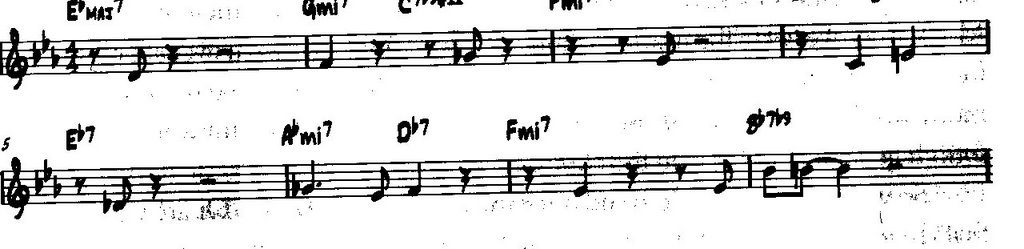
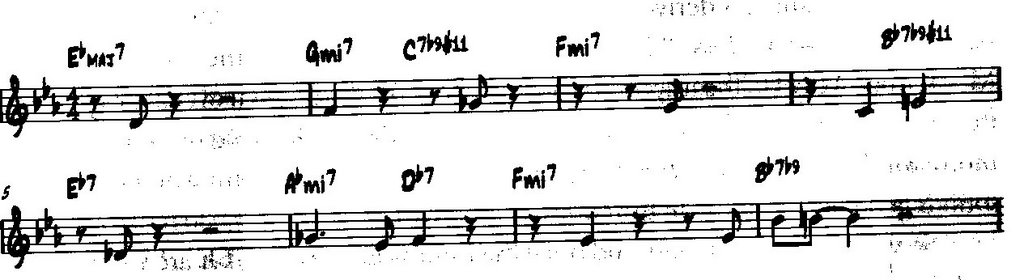
Paying homage to Thelonious Monk in the sleevenotes to House on Hill, Brad Mehldau reproduces the score of Monk's 'Ecstasy' (click to enlarge). As you can see, it looks like someone sitting by a river tossing in the loose change in his pocket.

It reminded me of another Monk track, or version of a Monk track (since there are always so many): 'Misterioso', where, having introduced the melody Monk hands it over to the vibes player, but still chips in now and then with a G-flat here, a C-sharp there. It's the artist as checkout boy, watching the customer do all the hard work punting the groceries along while he sits back and zaps them with his laser gun every few seconds. Or, another comparison, it's like Rubens dropping in on his workshop assistants to check how the latest Madonna is coming along and doing the eyes before heading off for lunch.

Monk's last years were clouded by illness. He retreated into chronic aphasia and a strange addiction to getting up during his set and turning in counterclockwise circles for a long, long time. Personally, I blame the hats.

Oh, and Monk's middle name was Sphere.

Monday, October 16, 2006

Attempt to Discover Life


Crooked, up-and-down, wood-fringed fields seen from a train, under mist at dawn, with ditches and drains running off, and a stray hare galumphing from one end to the other, that will have been happiness, that will have been life, not my life necessarily, but life, of a kind.

Sunday, October 15, 2006

Veilwatch


In the light of Jack Straw's comments on the veil we turn the spotlight on the worrying subculture of football mascots, of shadowy individuals such as Oldham's Chaddy the Owl, Burton Albion's Billy Brewer and Preston North End's Deepdale Duck, and ask how much longer we should be expected to tolerate the refusal of this handful of extremists to integrate with society at large, spreading fear and alienation in their wake as ordinary citizens of Preston attempt to make eye contact with {snip}

Terminological


Since Rob McKenzie questioned my use of the phrase ‘soft racism’ to describe Ron Silliman’s position on poetry from this side of the Atlantic, I thought I’d expand on it a little. Silliman, it seems to me, speaks from a position of unearned and unquestioned American exceptionalism, which he feels licenses him to write off whole other poetries that he, as an American, can’t ‘hear’. As readers, we’re all familiar with the effort involved in tuning in to foreign poetry: a British reader, whose idea of contemporary poetry was Simon Armitage, would find contemporary French poetry very disorienting, wholly lacking in the wised-up, slap-happy colloquialisms and pop-culture references that make up so much British poetry today. Except, at this point, readers who can’t quite hear what’s going on can make the simple choice to listen a little bit harder. Silliman doesn’t and won’t: he says, I can’t hear you, therefore you have nothing of interest to tell me. Or if pressed, he has his ‘School of Quietude’ alibi: I don’t need to listen; I know your kind; I know what you’re like. And that seems to me, in the most obvious way, a piece of literary chauvinism and, why not, soft racism.

It’s both poignant and laugh out loud funny, in the new collection of William Logan’s reviews, The Undiscovered Country, to find him ticking off American readers for their provincial slowness to recognise the talents of foreign but US-based poets such as Muldoon and Maxwell, since from Silliman’s point of view to take an interest in these people would already be a form of provincialism because – and at this point in the argument the ‘School of Quietude’ alibi kicks in and all chance of meaningful discussion has been lost. But ‘frankly’, to use the Silliman word Mark has quoted in the comments, poets who refuse to listen to other poets (which is their right, after all) should at least do better than trot out excuses with about as much intellectual credibility as ‘My daddy said I wasn’t allowed play with you anymore.’

But then, even as I type this, I see a posting on Silliman's blog linking to a 'School of Quietude poem that I genuinely like' (he means one by Frank Bidart). So maybe there's hope for ole Silliman after all!

Friday, October 13, 2006

North Korea and the Bomb


Several days now since its nuclear first time, North Korea has yet to get that promised call-back from the bomb it met in a Pyongyang bar midweek. 'Call us', a visibly rattled Kom Jong Il declared before an audience of nettle-farmers, 'You said you would. I know it wasn't a... very big bang, but we waited so long for it. Don't just dump us now.'

The Dog's Vomit


Still on Gael Turnbull (see two posts down): listening to John Peel, Joe Strummer said, was like having a dog be sick in your face. Or in another version I prefer of the same soundbite, being praised by John Peel, Joe Strummer said, was like having a dog be sick in your face.

Falls the Shadow


'The Poetry Book Society launches the T.S. Eliot Prize School Shadowing Scheme this autumn.'

In his poem 'This Poem Has Won No Prizes', Oliver Reynolds writes (this week's TLS, translation available on demand for poetically challenged American auditory canals):

This poem remeber when T.S. Eliot
was the name of a poet, not a prize.

Thursday, October 12, 2006

The Soft Racism of the Post-Avant


In between bouts of celebratory masturbation in front of a full-length mirror to mark its ongoing campaign against the SOQ (School of Quietude), Ron Silliman's heroic post-avant indulges a fair amount of what can only be called soft racism, and nauseating soft racism at that. Commending Gael Turnbull to us, Silliman writes:

The number of, to use Charles Bernstein’s apt phrase, island poets with an ear that makes sense to a Yank auditory canal is exceptionally small: perhaps, in the past century, just four – Bunting, Turnbull, Raworth, Thomas A. Clark. This is not to fault others – from J. H. Prynne to David Jones to Douglas Oliver or Allen Fisher – whose ears may well make perfect sense on their own terms, but who don’t, how shall I say this, travel well on at least that one level. But I do think it’s an enormous advantage in the pure accessibility of the work.

{Quotation ends}

So, without faulting Geoffrey Hill, Thom Gunn, Roy Fisher, never mind J.H. sacred cow Prynne, sorry, but your access to the sacred American auditory canal (by which we mean Ron Silliman's sacred American auditory canal) has been denied. Please get back on the airplane now.

Wednesday, October 11, 2006

Potopompos Scroton Evohe


Beckett fact no. 72.

Ten classical references in Beckett

1) Prosperine and Atropos feature in the French poem jusque dans la caverne ciel et sol. Atropos is the oldest of the three Fates and the one who cuts the chord of life, suggesting she is also the noire soeur of the final mirlitonnade, ‘qui es aux enfers / à tort trenchant /et à travers.’

2) ‘Suave mari magno’, Malone remembers from Lucretius’s De Rerum Natura. ‘‘Tis sweet on graund seas, when windes waves turmoyle, /From land to see an others greevous toyle’, as Florio translated it. Ludovic Janvier remembers Beckett quoting the line to describe his hostility to theatre audiences who presumed an immunity to what they saw on stage. My spellcheck wanted to change ‘magno’ to ‘mango’, but that’s a different Lucretius poem altogether.

3) ‘Atlas, son of Jupiter!’, Pozzo exclaims in Waiting for Godot. Except Atlas is the son of Japetus, as was pointed out to Beckett, who then changed the line. ‘Pan sleeps’, Pozzo says too.

4) And then in the second act when he comes back and falls over, and Estragon and Vladimir do too, Estragon identifies himself in the French text as ‘Catulle’. And memoria praeteritorum bonorum, Vladimir says a bit later.

5) The Watt addendum in Latin beginning Faede hunc mundum intravi is Aristotle’s last words: ‘filthy I entered this world, anxious I lived, perturbed I leave it, cause of causes why I’m so miserable.’

6) Richard Ellmann describes Joyce getting Beckett to check out Greek quotations for him, and in Mercier and Camier Mr Madden gives us a blast of Homer: ‘Homer tells us, Iliad Book 3, lines 85 and following, in what consists happiness here below, that is to say happiness. Oh I gave it to them! Potopompos scroton evohe! Like that, hot and strong! […] Potopompos scroton evohe, the soft cock and buckets of the hard.’

7) The Unnamable holds forth angrily on Prometheus: ‘For between me and that miscreant who mocked the gods, invented fire, denatured clay and domesticated the horse, in a word obliged humanity, I trust there is nothing in common.’

8) And also mentions a ‘galley-man, bound for the Pillars of Hercules’, and the Colossus of Memnon.

9) The Hölderlin poem mentioned, garbled rather, in the fourth section of Watt is Hyperions Schicksalslied, ‘Hyperion’s Song of Fate’, sung by the Titan who also inspired that long poem (those long poems) by Keats. The lines should read:

Wie Wasser von Klippe
Zu Klippe geworfen,
Jahr lang ins Ungewisse hinab.

10) And finally, the narrator of First Love ‘divellicate[s] urtica plenis manibus’, meaning he vigorously tears up nettles. Maybe the phrase is a token protest against moving away from Latin, from French to English, since in Premier Amour it appears as the humbler ‘Arracher à pleines mains les orties.’

Tuesday, October 10, 2006

Sloths, Again


Beckett fact no. 71.

Sloths in Beckett: they appear in the early French poem bois seul.

les absents sont morts les présents puent
sors tes yeux détournent-ils sur les roseaux
se taquinent-ils ou les aïs


The eyes (or is it the rushes?) are teasing themselves or the sloths? No wonder the speaker drinks alone.

Human Spam


I hate writers' blogs and websites that tell us on a daily basis how busy, busy the creatures are keeping, reading here, publishing in a magazine there, appearing in an anthology there. If I want to read your work, I will, if not, not. You are the human spam of the literary world. Try doing nothing for a change, or if you can't give up all at once at least stop goddam telling us about it.

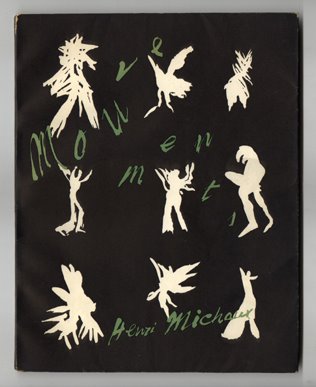
Henri Michaux


Beckett fact no. 70.

Two Beckettian orphans I found trawling around on the Editions de Minuit website.

First, a reference in their chronology of Beckett's life to a 1949 translation of Henri Michaux's poem À hue et à dia (as 'To right nor left') for the little review K. That's one for the bibliography.
And second, a French version by Edith Fournier of the rare text 'Ceiling' in the expanded 2002 edition of Pour finir encore et autres foirades, available in print in English only in the 1985 tribute to Beckett's Israeli artist friend, Arikha (Thames and Hudson), though an online version can be found here.

And since we're talking Beckett rarities, another one I found recently is the uncollected poem 'pss' in the Spanish edition of the poems, Obra Poética Completa (Hiperión, 2000). It originally appeared in New Departures in 1981, and begins as follows:

there
the life late led
down there
all done unsaid

Monday, October 09, 2006

Erosion


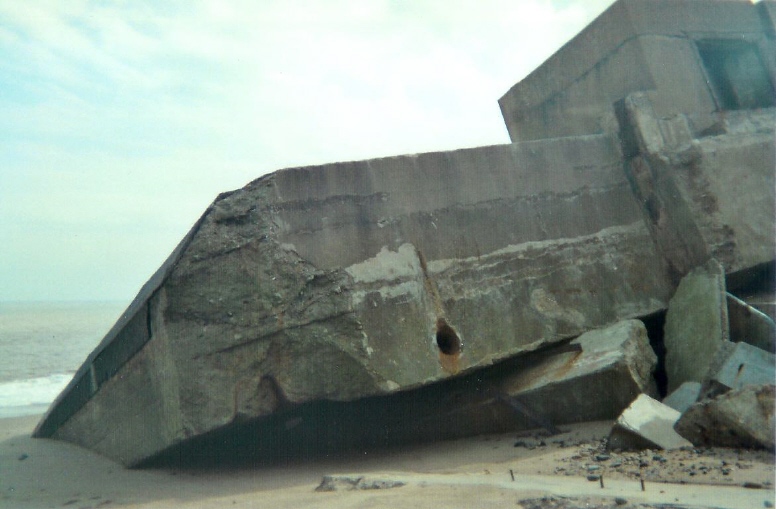
The village of Kilnsea is falling into the sea.

Sunday, October 08, 2006

Charlie Patton's Spoonful


Robert Crumb loves his spoonful of Charlie Patton and so do I.

'A Spoonful Blues' is a remarkable three-way conversation between the song lyrics, Patton's spoken interjections, and the gloriously tweaked minor thirds he introduces rather than finish some of the more risqué lines. Here's how it opens ('...'= guitar tweak):

(spoken: I'm about to go to jail about this spoonful)
In all a spoon',
'bout that spoon',
The women goin' crazy, every day in their life 'bout a...

It's all I want, in this creation is a...
I go home (spoken: wanna fight!) 'bout a...
Doctor's dyin' (way in Hot Springs !) just 'bout a...
These women goin' crazy every day in their life 'bout a...

Would you kill a man dead?
(spoken: yes, I will!) just 'bout a...
Oh babe, I'm a fool about my...
(spoken: Don't take me long!) to get my...
Hey baby, you know I need my...

{Quotation ends}

The song is also believed to be about cocaine, as well as the other thing.

Voice on voice on guitar: it's not just that Patton comments to himself on the song as he sings it, or answers its questions call and repsonse-style, it's as if the song is singing along to itself.

Thursday, October 05, 2006

National Poetry Day


Today, sadly, is national poetry day. Even just typing those words makes me feel as if I'm encouraging it. John Hewitt said: 'If you write poetry, it's your own fault.' Being a poet is entirely indefensible. That's the great thing about it.

Wednesday, October 04, 2006

The Secret Laugh of the World


Roy Fisher: always liked him a lot. Rereading him recently reminded me of this piece about The Cut Pages in Poetry Ireland Review a while back.

As gestures go, publishing a Collected Poems before you turn forty would seem to be on the grandiose side, but when Roy Fisher (b. 1930) published his in 1969 he hadn’t been writing for several years and wasn’t expecting to again. What readers might have thought was a smirk on his face was in reality closer to a valedictory grimace. Collected Poems came with a jacket photograph of a young boy at a street party in Birmingham for George V’s silver jubilee. The scene is straight from a poem like ‘Toyland’, with its ‘old couples, the widowed, the staunch smilers, /The deprived and the few nubile young lily-ladies.’ The youngster doesn’t look very impressed with his plate of biscuits either, and unlike most of the other revellers hasn’t bothered to put his paper hat on. A sharp-eyed observer might diagnose a case of proleptic post-imperial ennui, as the crowd waits for the barbarians at the gate who, even in 1935, must have been looking like ‘a kind of solution’, as Cavafy would put it. Fisher’s classmates, after all, express a ‘half-shocked envy’ when his aunt and two cousins are blown up in a bombing raid a few years later. As for Fisher himself, he has never been one for nostalgia: ‘I had no pain of it; can find no scar even now’. Philip Larkin does a good job of blanking out wartime Coventry in ‘I Remember, I Remember’, but not before he had permitted himself the wistfulness of ‘The March Past’ and its ‘astonishing remorse for things now ended /That of themselves were also rich and splendid /(But unsupported broke, and were not mended)’. Fisher’s unastonished blankness in the face of the national question, by contrast, is consistently unflinching. In ‘The Nation’ he describes a ‘national day’ on which everything described is prefaced by the adjective ‘national’, reducing the concept to a state of pleonastic exhaustion long before a group of offenders are clapped in the ‘national prison’ and subjected to the ‘national /method of execution’ for succumbing to the ‘national vice’, whatever that might be.

Organising a nationwide party to mark the occasion might be a bit excessive, but readers sitting down to Fisher’s work for the first time would have every right to feel in celebratory mood. Why wouldn’t they? He’s one of the best English writers around. Yet for all the superlatives I may wish to throw in his direction, Fisher’s position in British poetry today is an uneasy one. A lot of his books are hard to find or long out of print. Sometimes his anthology number comes up, but sometimes it doesn’t. Like Philip Larkin he loves Pee-Wee Russell and Coleman Hawkins, but unlike Larkin he also likes the Black Mountain Poets and has been known to call himself ‘a 1905 Russian Modernist’, which suggests that membership of the ‘old-type natural fouled-up guys’ club will forever elude him. Though held in great esteem by admirers – as witness the Festschrift, News for the Ear and John Kerrigan and Peter Robinson’s essay collection The Thing About Roy Fisher – he has never quite loomed large enough in the landscape for the readership he needs and deserves. There was a Fisher Collected in 1969 but there wasn't as recently as 2004, before the appearance of The Long and the Short of It: Poems 1955-2005, and if that isn’t a textbook definition of the phrase ‘arsy-versy’ I don’t know what is.

Fisher’s first book, City, appeared in 1961. Robert Conquest’s Movement anthology, New Lines, was still policing sphincters up and down the land, but foreign help was at hand the following year in the form of Alvarez’s The New Poetry. The names on the team sheet were Lowell, Berryman, Plath and Sexton. If only things had been that simple! The delicious irony of The New Poetry was that, for an anthology so concerned to blast British poetry out of its ‘gentility principle’, Alvarez fell prey to an American gentility principle of his own, suppressing any suggestion that the American poetry of the 60s might also stretch to Ginsberg, Duncan, O’Hara, Schuyler, Rakosi, Oppen, Dorn, Niedecker or Spicer. Any writers under their influence on this side of the water were thus doubly excluded. A crucial conduit of alternative American writing in Britain was Fulcrum Press, publisher of Fisher’s study in itchy paranoia The Ship’s Orchestra, Collected Poems and Matrix, and most unusually of all the book I want to discuss here, The Cut Pages. Sketched as an attempt to shake off a long spell of writer’s block, this is still the most extreme of his books and to some critics (notably Marjorie Perloff) his truest and best. Discontinuity is all, freedom from what Beckett called ‘the vulgarity of a plausible concatenation’. As Fisher puts it in an author’s note, the aim was ‘to give the words as much relief as possible from serving in planned situations; so the work was taken forward with no programme beyond the principle that it should not know where its next meal was coming from.’

Before turning to The Cut Pages I would like to propose the phrase ‘Tennis Court Oath syndrome’ as a contribution to literary discourse. Tennis Court Oath syndrome is what happens when readers think they’ve worked out something startling and new, only for the writer to turn around and trump them with something not just startlingly new but incomprehensibly so, even and precisely at the risk of alienating his or her greatest admirers. Since I’m naming it after his notorious second book, John Ashbery displays Tennis Court Oath syndrome, or did once, a very long time ago. But sooner or later all writers have to decide where they stand on the innovation question. Some make it the driving force of their careers, turning from the ‘plane of the feasible’ in disgust, as Beckett urged Duthuit, ‘weary of pretending to be able, of being able, of doing a little better the same old thing, of going a little further along a dreary road’; others would have us believe that ‘All we can do is write on the old themes in the old styles, but try to do a little better than those who went before us’, as Hardy told Robert Graves. To describe The Cut Pages as a case of Tennis Court Oath syndrome, coming as it does after the not exactly easy reading of The Ship’s Orchestra, is to underline just how extreme a departure it was. But Fisher has never innovated for innovation’s sake or because he expects a congratulatory telegram from the academy of fine ideas: the dust jacket of The Cut Pages warns that ‘he should not be categorised as an “experimental prose writer”’, and ‘does not fit any of the familiar formulae of modernism.’ If they were familiar, they’d hardly be any use anyway. The motivating force behind The Cut Pages was more urgently personal and painful than that.
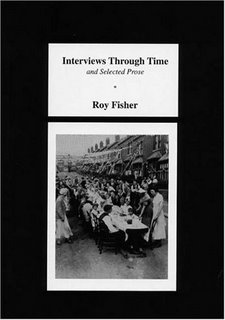


To start with the title: the pages are ‘cut’ because, keeping a ‘diary of demoralisation’ after a divorce and during his writer’s block, Fisher tired of having to skim past the old entries, so he tore out the blank pages and started again. Even so, the diary-like ‘entries in their hundreds’ that followed this fresh start were ‘oblique, coded, desperate and dispiriting.’ The resulting book is 80 pages long, and divided into five sections: ‘Metamorphoses’, ‘The Cut Pages’, ‘Stopped Frames and Set-Pieces’, ‘Hallucinations’ and ‘The Flight Orator’. The opening note describes the ‘Metamorphoses’ as ‘exercises in changing, in full view, one thing into another whose nature was quite unforeseen at the outset’. Where elsewhere in the book Fisher pares his language down to miniature stumps and shells of sentences, here he delivers a hypnotic superabundance of detail that makes the language swim before the reader’s eyes. In the first metamorphosis he describes a sleeping woman who changes into a swimmer, perhaps the swimmer we find in the first of the ‘Stopped Frames and Set-Pieces’ (and on the uncredited cover painting). The language sins against the Low Church modernist style-sheet in its unabashed embrace of metaphor:

Enough depth. To clear and come free. There is no taste in the water, there are no edges under it: falling away, the soft mumbled hollows and mounds of marble, veined with brown, a lobby floor gone down into the descending levels of a sea-basin. The sleep comes naked

Rising through the clear fluid, making their own way, the dragging wisps of brown that were secret hairs or the frame of a print on the wall. And light that cracks into the bubbles near the surface, lighting them like varnish bubbles, breaking them into the silent space between the surface and the curved roof, threaded with moving reflections of water light.

In the absence of any controlling narrative voice, the metaphoric transformations threaten to overwhelm rather than reassure the reader, building into a ‘mass of things, indistinguishable one from another’. Information throws itself at the text faster than Fisher can process it: a man is ‘making for the ferry; no he’s not. He stands a while and goes somewhere else.’ For all their morphing minute particulars, one thing the metamorphoses refuse to mutate into is a worldview: ‘No system describes the world’. But this is not to license a return to self-sufficient empiricism. As Fisher observed of William Carlos Williams’s famous dictum, ‘The trouble with “No ideas but in things” is that it has become an idea.’ Unlike Williams, whose red wheelbarrow means just that, a red wheelbarrow, Fisher gives the impression of unmooring his objects to wander as they please. They are ‘dying to get out’ and ‘exposed to the open at all events’. The chain of metaphoric substitution in the visual field responds to and shapes an urban environment in constant destructive evolution: ‘Washes of screen. Men are fluttered. Houses are being thrown away wholesale. Butchers are on air.’

The description of a man undressing in the fifth and final metamorphosis prepares us nicely for the stripping away of the narrative exoskeleton in the book’s titular central section. One sure way to misrepresent ‘The Cut Pages’ would be to quote it within a prose paragraph like this, rather than on its own visual terms: if its atomised elements mean anything, it is in conjunction with the white space that separates them, much like the pauses for breath between ‘versets’ in Beckett’s How It Is. Each fragment establishes and is as suddenly forced to relinquish its hard-won textual space. What drives the text onwards so relentlessly, snatching the ground from under its feet? Fisher isn’t saying. ‘There is no process’ but ‘There are many changes’. Attempting to make sense of this densely resistant writing Perloff has suggested that the sequence is organised around ‘three sets of verbal clusters: (1) references to ordering, control, containment; (2) references to movement, change, opening, journeying; and (3) images of vision and items that obscure vision – shade, shadow, shutter.’ In support of this we can point to Fisher’s reliance on (dis)orienting terms such as ‘frame’, ‘frameless’, ‘cut’, ‘origin’, ‘displaced’, ‘discontinuity’, ‘undifferentiated’ and ‘process’, as the text ceaselessly changes perspective, attempting to bring into focus the experience of flux itself. When Donald Davie made his strenuous effort in Thomas Hardy and British Poetry to align Fisher with Larkin as a poet of rooted nostalgia for post-industrial Britain, he was forced to turn a blind eye to the jump cuts and discontinuities in Fisher’s work; but, to do him justice, even in the forbidding atmosphere of The Cut Pages the language of rootedness and community mysteriously persists:

Leviathan Lane. Home of the Works. Appears to have rolled over and huge stretches of its ghastly grey underparts come into view

Stern of a spiral stair depending through glass light, in going down, in confined but neatly stacked office and reception space

There is one flung out. On that one the light is sharp. There is no half-light; only the grace of diffusing what is full

They try to get in through the frosted glass, their spidery dark hands show almost visible as themselves as they scrabble. They come only at one oblique off-centre place; they can’t succeed

Accretions after origin. Atypical hazard. All we are worrying about is our own distress at their frustration

Communitas. On the march. March a path to march on

I owned a patch, they marched on it. What march is that? My tit

Here is the ‘dispirited avoidance of concept, copula, cognition’ which Simon Jarvis has found in Fisher at his most extreme, but as Fisher insists ‘This discontinuity is my discontinuity’, not just any old statement of an abstract predicament. The obsession with lighting effects stages a series of theatrical spaces from which any actors have gone maddeningly absent (‘Nobody has to have a face. Nobody who has a face can keep it.’) The ‘they’ are the off-stage prompters, town planners and literary aldermen laying down the city boundaries to which our urban and poetic narratives are expected to adhere. Fisher’s repeated acts of cutting into his urban and narrative space allows him to find a fissure (the Fisher fissure) in these continuities and lose himself down it, White Rabbit-style. Or as he says in section three, ‘so much isn’t the railroad, so little is.’ Another useful insight from Perloff is her comparison of the fourteen sections of this central sequence to the fourteen lines of a sonnet. The complaint that this writing is formless and sprawling has no foundation whatever; it’s just that, as with the mystical urban geometry of A Furnace, the patterns are taking place over lengths beyond the visible limits of the two pages open before us. Stand on the Cerne Abbas man and you may notice that the earth beneath your feet is all chalky white, and nothing more; if you want to see the Cerne Abbas man you’ll have to go and stand on the hill opposite instead. Trying to get the patterns of The Cut Pages into focus demands much the same effort.

The 1987 reprint of The Cut Pages contains only the central sequence, which leaves its relation to the original other four sections in some doubt. My preference is to see them as analogous to the ‘Addenda’ to Beckett’s Watt, whose ‘precious and illuminating material should be carefully studied. Only fatigue and disgust prevented its incorporation.’ Particularly attractive is the description from ‘Hallucinations’ of the tombstone maker’s yard and the discarded trunks of statues littering it. Here we confront not just a graveyard of possibilities, but a graveyard’s graveyard. The albino raven Fisher finds there is emblematic of aborted promise, reminding the poet how ‘There are suburbs I have never properly visited, or have never managed to find recognisable as I passed through them, districts that melt into one another without climax.’ In the same way that Bishop Berkeley’s God has to be in the forest when nobody else is, to hear the tree falling, the raven allows Fisher to assert an imaginative claim to parts of his city he hasn’t ever bothered to visit. Unlike Yeats’s fantastic bird singing for the lords and ladies of Byzantium, the albino raven is the work of puffy-eyed and crablike artisans who supply pet-shops or garden centres. Amid such multiple resignations of the Romantic inheritance does Fisher reign over the peculiar domain of The Cut Pages, with a mixture of implacability and bewilderment: ‘Slowly this bird and I are working on each other. The only rule in our game is that neither of us must appear to change.’ ‘So hoarily embedded in symbolism’ in appearance, it can only be bad manners on the bird’s part not to croak an obliging ‘Nevermore’ from time to time. But no, it won’t. As Fisher writes of another bird, the ‘great fat thrush’ of the book’s last section, ‘The Flight Orator’, ‘He may be dead; he may be struggling under the ground for a long while. Nothing can reach him. Nothing of this will ever be repeated.’ Any further inquiries can to referred to the final Watt addendum: ‘no symbols where none intended’. And yet the effect of all this atomisation and flux is not to silence Fisher’s work; its singular achievement is, patiently, ingeniously, to make these very things speak. As he writes at the end of ‘Toyland’ of his T.F. Powys-like townsfolk going about their business:

The secret laugh of the world picks them up and shakes them like peas
boiling;
They behave as if nothing happened; maybe they no longer notice.

I notice. I laugh with the laugh, cultivate it, make much of it,
But still I don’t know what the joke is, to tell them.

Fisher’s poetry picks its readers up and gives them a good shake, but only the most obtuse could behave as if nothing were happening. Most will have the good sense to acknowledge how they have been marked with a permanent but indefinable response, at once subtle and momentous, a mixture of a smirk and a grimace at the secret laugh of the world.

Tuesday, October 03, 2006

Hapax Legomenon

Words that don't exist but should, pt. 63: trade unionist Ernie Bevin once recommended that a derisory pay-rise offer be met with a 'complete ignoral'.


I Love You Madly


The postmodern reply to the modern consists of recognizing that the past, since it cannot really be destroyed, because its destruction leads to silence, must be revisited: but with irony, not innocently. I think of the postmodern attitude as that of a man who loves a very cultivated woman and knows he cannot say to her, "I love you madly," because he knows that she knows (and that she knows that he knows) that these words have already been written by Barbara Cartland. Still, there is a solution. He can say, "As Barbara Cartland would put it, I love you madly." (Umberto Eco, Reflections on the Name of the Rose)
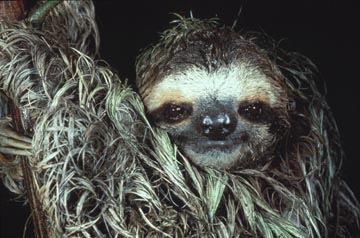

Barbara Cartland: eyes like two seagulls that have just smashed into the white cliffs of Dover, someone once said.